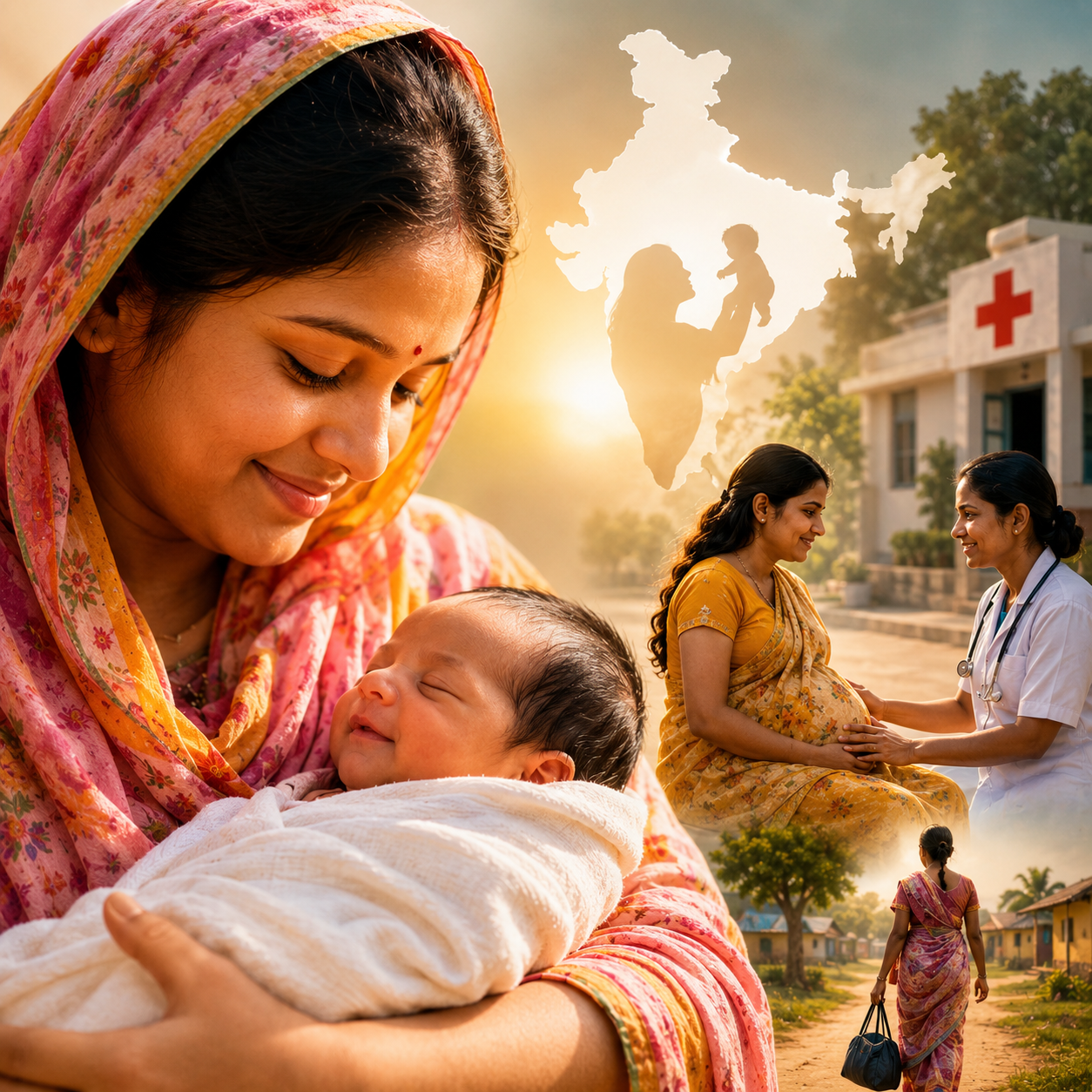
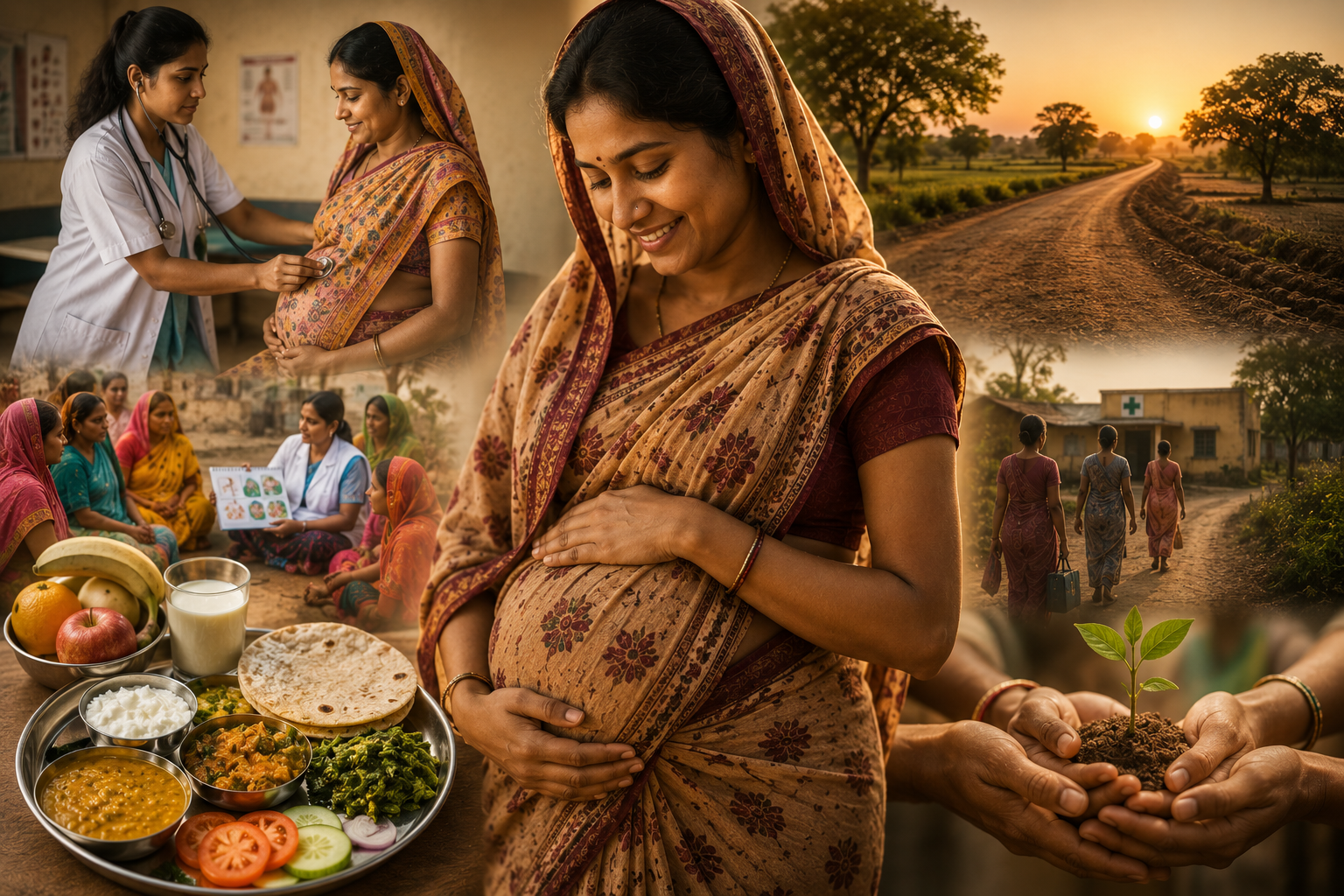
A deep sense of unimaginable joy is what every mother feels when her newborn is placed into her arms — a feeling of ecstasy every mother should have the right to experience. However, for the majority of pregnant women in India this fundamental right will never come to be, because the moment of birth is often frightening for them.
25,220 maternal deaths in 2020 — almost all of them preventable.
Maternal mortality rate (MMR) is the annual number of maternal deaths per 100,000 live births from any cause related to or aggravated by pregnancy or its management, excluding accidental or incidental causes. A maternal death is the death of a woman while pregnant or within 42 days of termination of pregnancy.
Maternal mortality is considered a key health indicator. The direct causes of maternal deaths are well known and largely preventable and treatable.
MMR, SRS data
Per 100,000 live births, from 2014–2016 to 2018–2020.
Annual maternal deaths
Total estimated deaths in India, 2016 to 2020.
MMR, UN MMEIG
India, 2000 to 2020. Global MMR fell from 339 to 223.
That is the difference between 2020 and 2016. Health system factors — institutional delivery and skilled birth attendance — are the biggest contributors to the reduction. Worldwide, deaths from pregnancy and childbirth fell from 451,000 in 2000 to 295,000 in 2017, a 38 per cent decrease.
Every time a woman in India becomes pregnant, her risk of dying is 50 times higher than the risk run by a woman in Norway.
Maternal deaths per 100,000 live births.
To reach the global goal of improving maternal health, we need to do more for those most at risk: women in rural areas, urban slums and poorer households, adolescent mothers, and tribal, Scheduled Caste and Scheduled Tribe groups.
Who are the faces behind these depressing numbers? What were their stories? What were their dreams? They left behind children and families. We should look for clues as to why their lives ended so early.
Mostly after childbirth.
Usually after childbirth.
Conditions arising during pregnancy.
Successive Central and State governments have worked hard to help poor pregnant mothers across India — providing health care at the terminal end of the health system in rural areas, training healthcare workers, running public awareness initiatives, and building better roads in rural areas.
More work needs to be done, since many pregnant mothers in rural India are underfed and routinely go hungry for days at a time.
This is where the bigger society should come forward to strengthen and supplement governmental efforts. Improving a mother’s nutritional health is a surefire way of protecting her from early death.
Dharmansh USA Inc, a 501(c)(3) charity, has embarked upon a mission to reduce the high MMR in India by providing essential nutritional support to pregnant mothers at the grassroots level. As an added benefit, this intervention also reduces the Infant Mortality Rate (IMR), which runs high in several parts of India.
Expectant mothers in poor communities are identified on the ground.
Social workers meet the mother and her family and explain what lies ahead.
A customized package is provided every month.
Three visits in the last trimester of pregnancy, six visits after delivery.
Sweets are distributed in the local community after the baby is born.
A new set of clothes for both mother and baby.
Assistance in procuring Iron-Folic Acid (IFA) tablets and accessing antenatal care (ANC).
Additional visits whenever the mother requests them.
Each package is built on the nutritional guidelines of the Maternal Health Division, Ministry of Health & Family Welfare, Government of India.
We started this project in West Bengal in October 2024 and have received a positive response from young mothers and social workers. Entire villages have been energized by the simple act of feeding a poor, pregnant woman. Please join us in this ongoing endeavor by contributing generously — as we receive more donations, we can expand further into other needy states across India.