
Hindu festivals are exuberant expressions of an ancient culture, with a definite influence on the identity of local, indigenous peoples and places across India. They provide a sense of collective belonging which, in turn, leads to common cultural practices and shared histories.
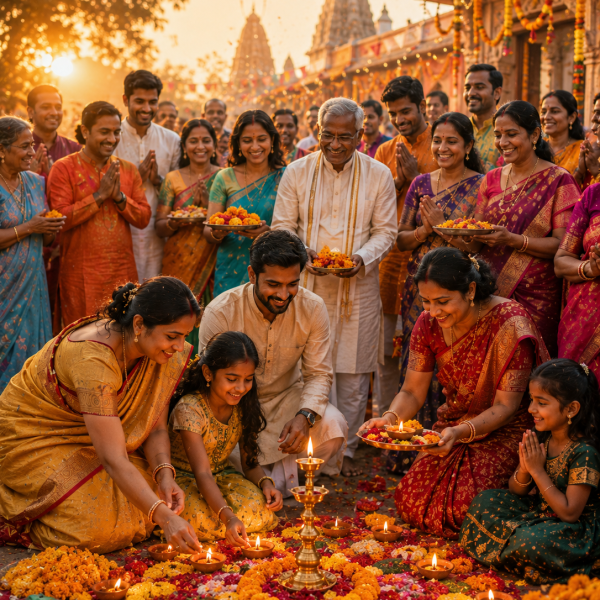
Most Hindu festivals have been celebrated since time immemorial. They continue to energize communities to come together, pray, eat, sing and dance in a unique expression of joy and devotion. Their role in keeping Dharma alive in the minds of a billion-plus souls cannot be overstated.
For any average Hindu, cultural identity is rooted in these festivals – and the sheer diversity of rituals and practices across them is mind-boggling.
Hinduism is not rooted in oddities imposed on groups and individuals. The expression of oneness among Hindus of all hues happens through festivals. That collective joy, and the invisible spiritual vibrations of these occasions, lift Dharmic strength and give the community its resilience.
Hinduism is the only surviving remnant of the ancient world civilizations.
In spite of a thousand-plus years of foreign invasions that destroyed several thousand temples across Bharat, in spite of millions of Hindus killed over the last two millennia in the name of religion, and in spite of relentless organized attempts at conversion, Hindu civilization continues to survive.
There is a long continuity in the thought process on how to erase Hinduism and Hindus, and those who hold such ideologies have never stopped trying. Numerous tyrants have come and gone, but none have been able to decapitate the spirit of festivals in Bharat. The methods, however, have changed.
Raw mob violence is unleashed on Hindu festivals, typically on religious processions and devotees. Numerous such episodes are reported every year from across Bharat. Attacks scar entire communities, and the resulting collective fear leads to a rapid disappearance of native cultural events and rituals.
Subtler, and in some ways more effective. Critical attacks on festivals using selected principles of modern science are all too common – the classic example being the annual disparaging of Diwali on the claim that firecrackers cause asthma, atmospheric pollution and even global warming. Both mainstream news outlets and peer-reviewed journals are used to this end.
Politicians are influenced to issue draconian orders restricting or banning key rituals and practices in temples across Bharat. Activist judges take suo moto action against age-old religious traditions, or respond favourably to mala fide Public Interest Litigations to the same effect.
Hindus are forced to abandon an all-embracing, spiritual and peaceful way of life, leaving them with nothing to draw joy and unity from.
Hindu society needs to understand this existential threat to our culture, come together, and take corrective action. Every Hindu must celebrate every local Hindu festival with full enthusiasm.
We must pass this civilizational torch to our children, so that succeeding generations celebrate the richness of Hindu civilization and the beauty of Sanatana Dharma.
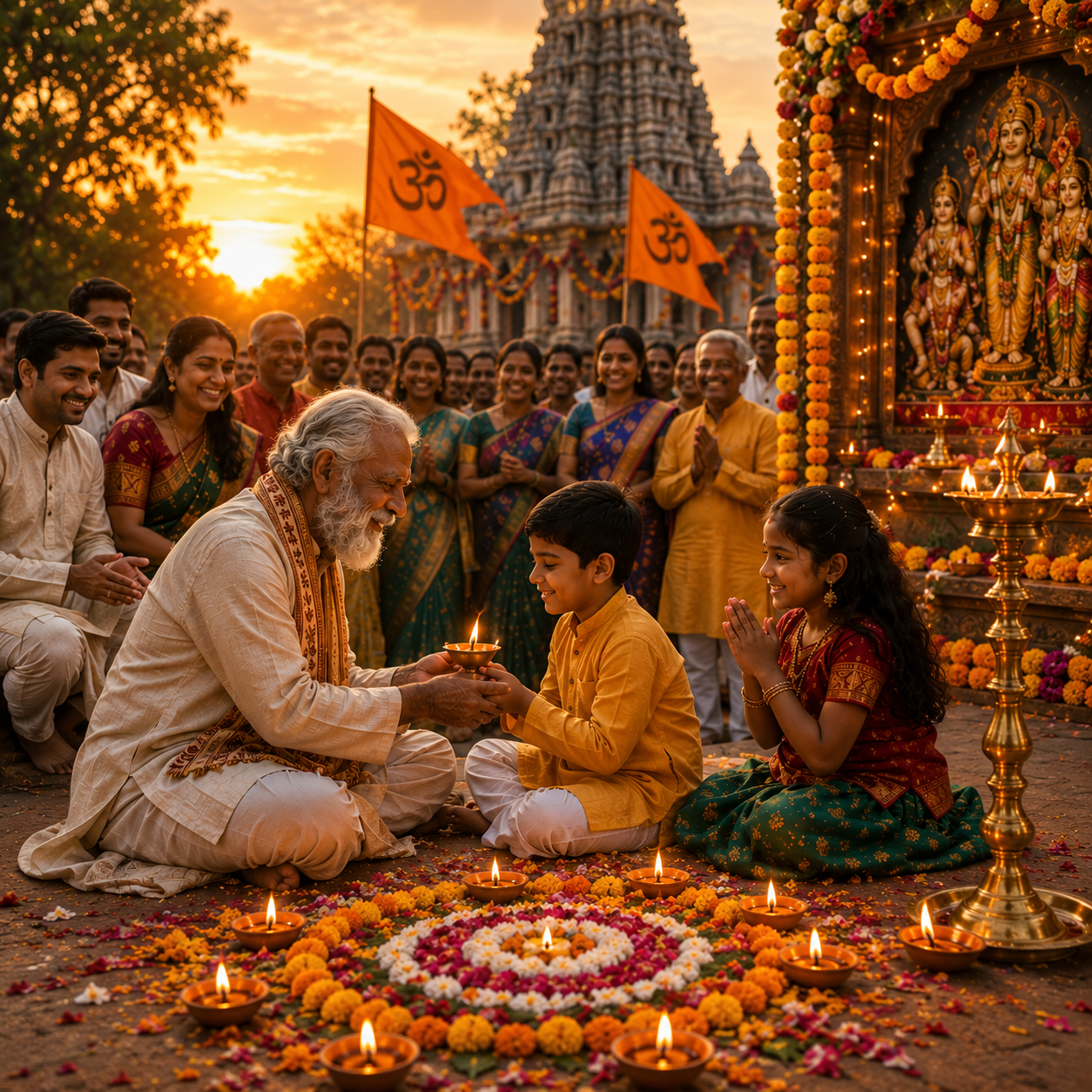
An ongoing fund from Dharmansh USA providing financial help to needy communities – anywhere in the world – so that no community has to let a festival lapse for want of means.
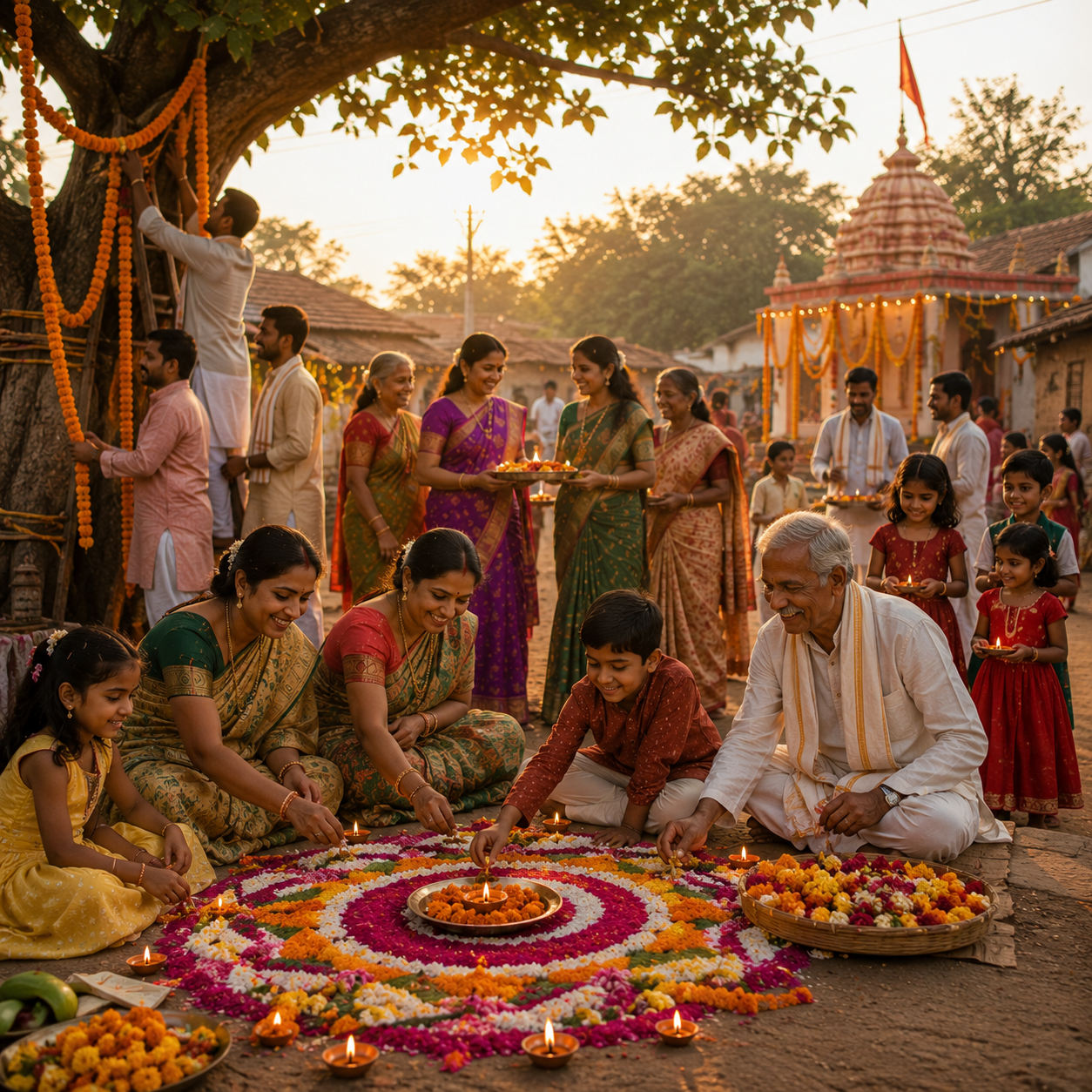
The worst victims of this continuous dissolution of traditions have been the hundreds of millions of poor Hindus living in villages and small towns across the Indian subcontinent – people who have still not lost touch with their Dharmic roots.
Every year they wait eagerly to celebrate their age-old festivals, and start preparations months in advance. They derive a deep sense of satisfaction and pride from these occasions. Families come home from all across the world, strengthening personal and cultural bonds.
In the modern world many festivals are dying off – not only because of external threats, but internal ones. The primary internal threat is simple: poor Hindus are unable to afford the rituals and celebrations at all.
Indigenous Hindus should be recognised as the primary guardians and interpreters of their own cultures, arts and sciences – whether created in the past or developed in the future.
To protect their culture and heritage, the indigenous people of India must be helped to control their own traditional ways of cultural transmission. Festival-culture must be kept alive at all costs.
Effective protection of this diverse heritage benefits all humanity. Cultural diversity is essential to the adaptability and creativity of the human species as a whole.
To help impoverished Hindu communities and keep indigenous cultures alive, Dharmansh USA has started an ongoing support fund providing financial help to needy communities anywhere in the world.